01 Dec

GREELEY ADVENTIST CHRISTIAN SCHOOL HOLDS SPECIAL CHAPEL IN HONOR OF LONG-TIME VOLUNTEERS

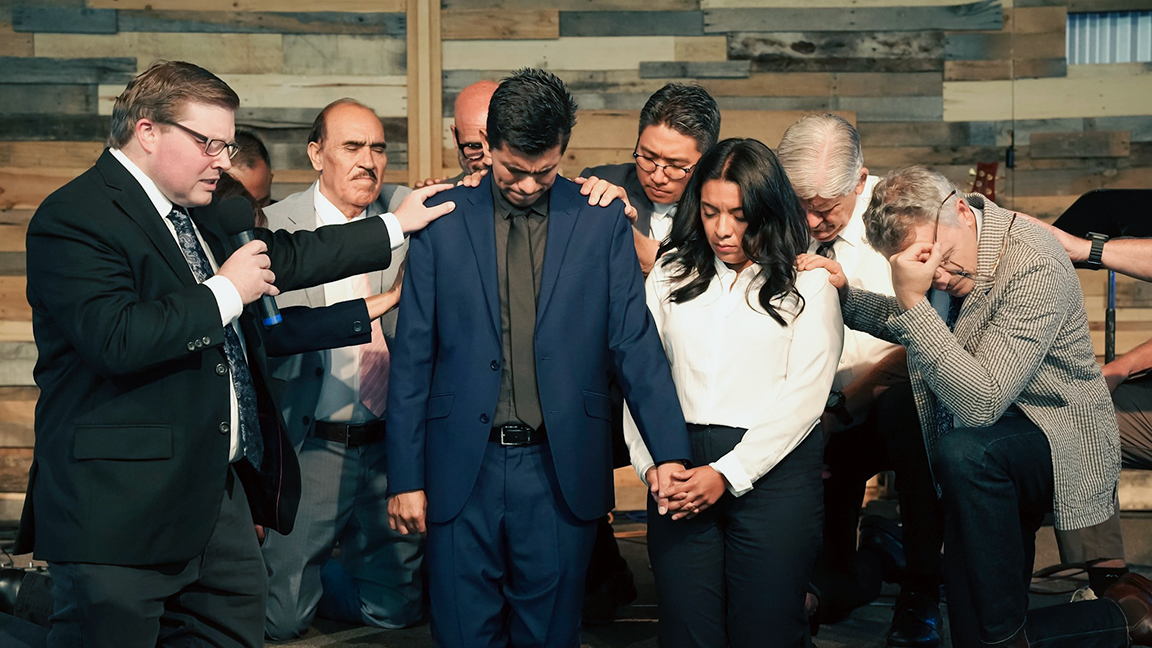
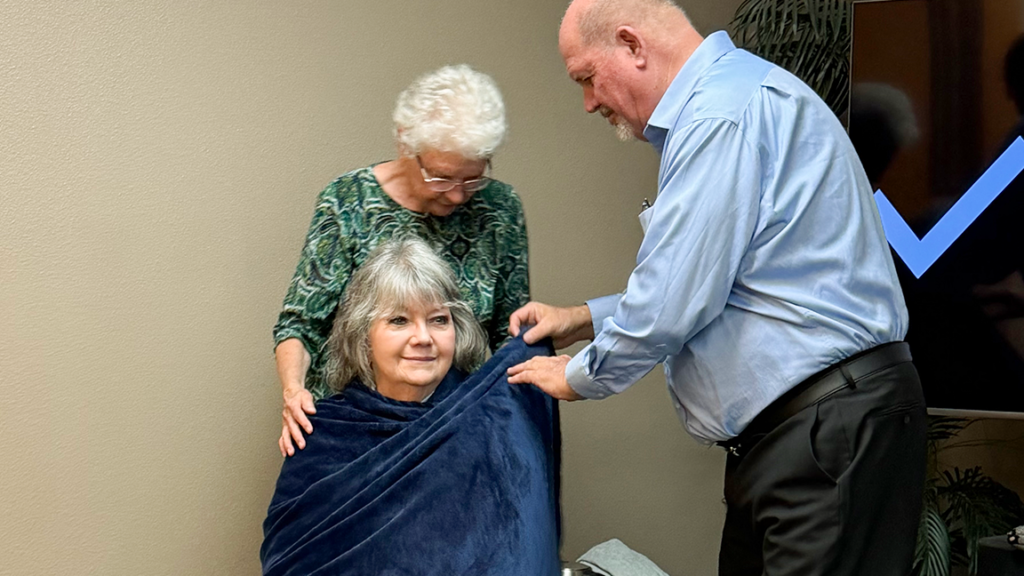
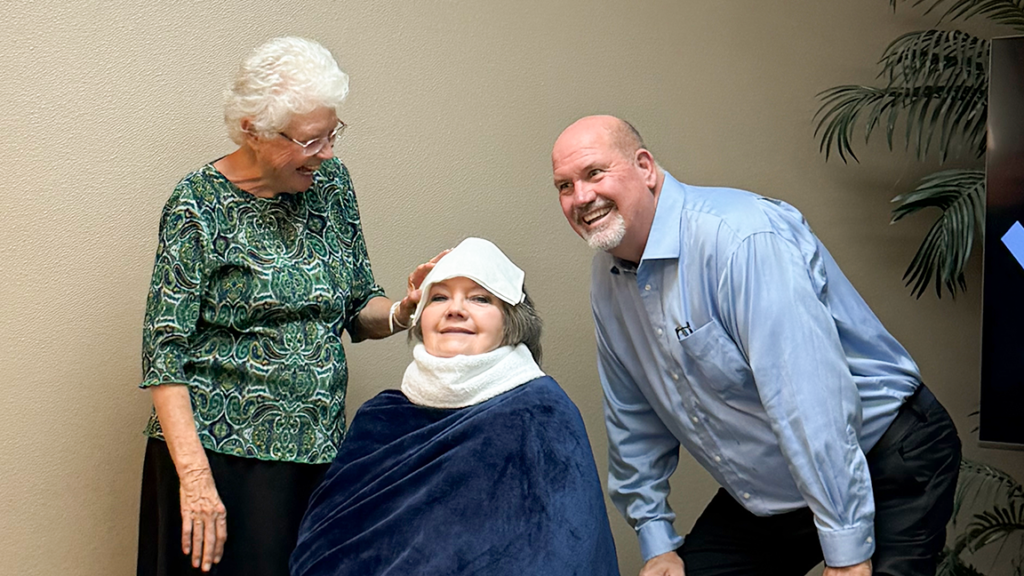
Will Reed – Greeley, Colorado … Greeley Adventist Christian School (ACS) in Greeley, Colorado, held a special school chapel service in honor of two long-time volunteers who will be moving from the area, November 20.

Students, staff, and church members came together to celebrate Doyle and Susie Dick, a retired couple and members of the Greeley Seventh-day Adventist Church, who spent several years at the school offering their service to the school’s needs.

Mr. and Mrs. D, as they were known to the students, worked in several areas over the years, starting in the spring of 2015. Doyle, a retired teacher, taught upper-grade math for several years while managing most of the school’s technology, including teacher computers, student laptops, printers, and internet equipment.

Susie worked primarily in the library, sorting and cataloging books, helping students find books to check out, and reading to the lower-grades students. The D’s were willing to be of service in needed areas, often volunteering at school fundraising events or being available as substitute teachers.

Will Reed, upper-grades teacher and principal at ACS, expressed gratefulness during the chapel service that the D’s consistently supported the school and blessed it with their efforts: “Doyle and Susie, we are not trying to idolize you today but rather to show our great appreciation for the sacrifice of time and resources that you both gave to ACS and to thank God for sending people like you here to make the school a better place,” he said.
The Dicks were also celebrated during the service by Amber Fellers, a former Rocky Mountain Conference teacher, Michael Shannon, pastor of the Greeley Church, and two current ACS students. Tony Gowler, ACS school board chair, presented the D’s with a plaque commemorating their time at ACS. He referred to them as “two selfless servants of God. They make the rest of us want to be better.”
As the service concluded, Doyle and Susie shared their appreciation to the school community for allowing them to play a part in the functioning of the school which gave them an opportunity to watch the students grow up and have an impact on them. Being at the school “meant just as much to us,” they said.

—Will Reed is principal and fifth through eighth grades teacher at Adventist Christian School. Photos by Will Reed.

01 Dec

MHA STUDENTS SERVE DENVER COMMUNITY AT THANKSGIVING EVENT

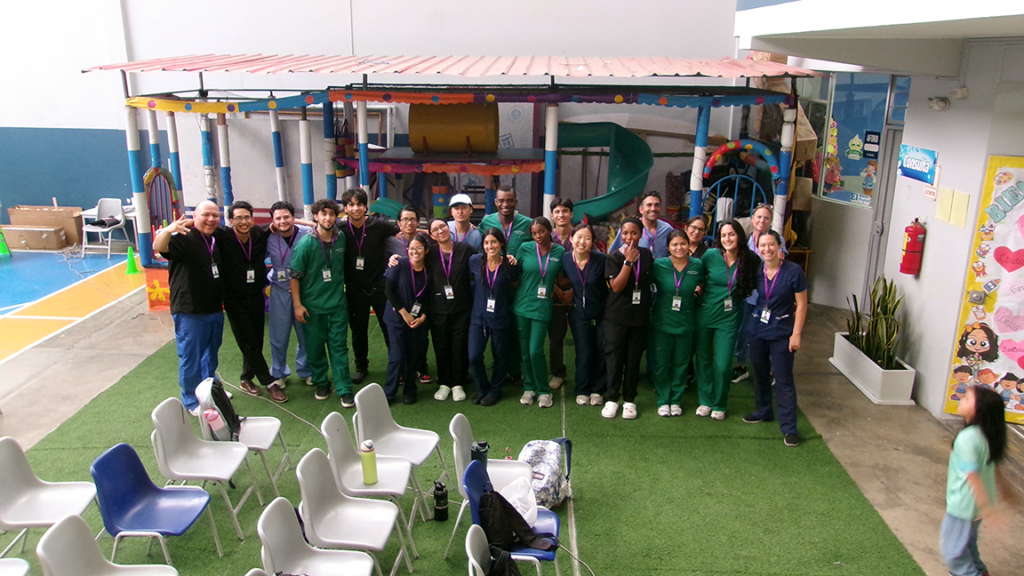
Cindy Roldan – Highlands Ranch, Colorado … Eleven Upper School students from Mile High Academy (MHA) in Highlands Ranch, Colorado, spent their day partnering with Denver Sur Hispanic Seventh-day Adventist Church to support their annual Thanksgiving breakfast and food bank operations, November 19. Students helped prepare and serve meals to community members and worked alongside volunteers to organize and distribute food to local families in need.

This service outing reflects MHA’s new Upper School service model—shifting from a single annual Service Day to ongoing, smaller-group service opportunities throughout the year. By mixing students from grades nine through twelve, the program aims to build stronger relationships and a consistent spirit of service within the school community.

MHA also contributed items for the event’s raffle, supporting the organization’s efforts to uplift and encourage families during the holiday season. Roger, MHA junior student, shared why these experiences matter: “It’s important for us to have empathy and put ourselves in someone else’s shoes. That is why my parents encourage me to participate in these events.”

MHA school chaplain RD Gallant reflected on the impact of the day, noting how diverse the human experience can be and how meaningful it is for MHA students to join organizations already doing significant work in the Denver area, such as Denver Sur Church.

Though the students returned tired from the full morning of service, each one expressed feeling blessed by the experience and grateful for the opportunity to make a difference. They also walked away with a deeper appreciation for the dedication of leaders like Margarita Meza, who works tirelessly to keep the food bank running for the community.

—Cindy Roldan is Mile High Academy’s director of Student Services. Photos supplied.

24 Nov

ROCKY MOUNTAIN REGION ADVENTHEALTH HOSPITALS RECEIVE TOP HOSPITAL SAFETY GRADE FROM THE LEAPFROG GROUP

AdventHealth – Denver, Colorado … The Fall 2025 Leapfrog Hospital Safety Grades are in, and AdventHealth’s Rocky Mountain Region hospitals have once again been recognized for their commitment to patient safety.

AdventHealth Avista, Castle Rock, Littleton and Porter have all earned an impressive “A” Hospital Safety Grade from The Leapfrog Group, an independent national nonprofit organization committed to enhancing patient safety. These biannual ratings are considered a leading benchmark for measuring hospital performance and patient safety across the nation.

  • AdventHealth Avista: 14th “A” in a row – Straight “A” Since 2019
  • AdventHealth Castle Rock: 3rd “A” in row
  • AdventHealth Littleton: 4th “A” in a row
  • AdventHealth Porter: 8th “A” in a row – Straight “A” Since 2022

Leapfrog assigns letter grades, ranging from “A” to “F”, to general hospitals nationwide based on more than 30 measures of performance. These include how well hospitals prevent errors, accidents, injuries, and infections, as well as the systems they have in place to keep patients safe.

These grades are widely respected for promoting transparency and accountability in health care and for driving continuous improvement that leads to better patient outcomes.

“Providing safe, whole-person care is central to who we are,” said Brett Spenst, CEO of AdventHealth’s Rocky Mountain Region. “This recognition reflects the consistent effort of our teams to uphold the highest standards of safety and excellence. I’m grateful to our leaders, team members, providers, and volunteers for their commitment to delivering exceptional care and living out our mission every day.”

The Leapfrog Hospital Safety Grade is the only hospital ratings program focused exclusively on preventing medical errors, injuries, and infections that can cause serious harm to patients.

The grading system is peer-reviewed, fully transparent and free to the public. Grades are updated twice annually, in the fall and spring.

—AdventHealth News. Republished with permission from the AdventHealth News & Stories website, November 13, 2025, article. Photo by The Leapfrog Group.

24 Nov

COMMENTARY: WHAT YOU CAN CONTROL – A RESILIENCE CHECKLIST FOR WOMEN WHO LEAD

By Brenda Dickerson

We hear much these days about the need for resiliency. In our high-burnout society, women who lead are especially vulnerable. What exactly is resiliency, and how do we increase it?

Resiliency can be defined as the ability to pivot, change, or adapt to new situations. Resilience is largely about attitude and having a healthy view toward change processes. A number of personal characteristics enable resiliency, including:

  • Flexibility
  • Self-confidence
  • A positive outlook/hopeful mindset
  • Well-developed problem solving skills
  • A willingness to embrace change
  • Personal strength based on one’s faith

People who have “stress-hearty” personalities realize what has to be done, and they do it right then. They look for the opportunities in every situation and choose to be involved in them.

Some practices that are foundational to increasing resiliency are taking time for soul-care, setting appropriate boundaries, managing stress in healthy ways, and practicing positive daily affirmations.

Here are additional practical ways of increasing personal resilience:

  • Laugh
  • Be creative
  • Set goals
  • Choose a positive attitude
  • Focus on good health
  • Focus on healthy relationships
  • Find balance
  • Believe in yourself
  • Remember, it’s temporary
  • Be aware of your feelings
  • Identify what you CAN control
  • Anticipate what’s coming next
  • Celebrate your efforts and your progress

Leadership isn’t a solo sport; it’s iron sharpening iron—voices in community shaping how we think, decide, and serve. Good leaders start by looking within—examining mindset, habits, and blind spots—then learn alongside others who are building teams, navigating change, and refining their craft.

—Brenda Dickerson is associate director of Communication for the Mid-America Union, editor of OUTLOOK magazine, and AWL Committee Member. Republished with permission from the November 10, 2025, Adventist Women Leaders email newsletter. Photo by Look Studio of Unsplash.

24 Nov

YOUNG CAMPION ACADEMY DONORS SAVE LIVES

Bruno Lopes – Loveland, Colorado … The student body at Campion Academy (CA) in Loveland, Colorado, overcame the fear of needles and came together to contribute to the donor blood bank, November 14.

The donor blood bank gave our students and staff two options, a basic donation amount, and a double donation for those who met the requirements.

Marc Winokan, a senior student who did a double donation, expressed, “I really want to help others that might need my blood. The process felt a little weird because I did a double donation where they take my blood, separate the red blood cells from the plasma, and put the plasma back in my body.”

The blood drive is an event organized by CA registrar Shannon Brown twice a year with the intention of encouraging Campion Academy staff and students 16-years and older to donate blood and help people.

Brown shared, “When I came to Campion, we didn’t have a blood drive, so I organized one since I feel it is so important to keep this life-saving activity going among our communities.” She also said, “My hope is that students continue to donate throughout their lifetime and create a lifelong habit that continues to impact their communities and ultimately, their world.”

—Bruno Lopes, Campion Academy Student News Team. Photos supplied.

24 Nov

CAMPION HANDBELLS CHOIR SALUTES VETERANS

Pamela Lah – Loveland, Colorado … The handbells choir at Campion Academy (CA) in Loveland, Colorado, got to commemorate Veterans Day by playing “A Patriotic Salute” in Loveland’s parade, November 11.

The bells worked hard, preparing for the parade for weeks. Theo Poloza, a senior student, reflected, “I was nervous to do something new, specifically playing while moving. However, in the end, we played really well and sounded great. It was truly an honor to perform for the veterans.”

The parade itself lasted for about 50 minutes and included a war plane flyover, historical military vehicles, and, of course, veterans. During the parade, four students held a Campion Academy banner in front of the bell’s float.

Andrew Blomberg, CA Maintenance director, drove the Campion maintenance truck, pulling the trailer full of bells, which had been decorated in a patriotic theme by Toni Odenthal, CA director of Alumni and Development. Dick Stenbakken and Elliot Fortener, Campion Seventh-day Adventist Church veterans, marched behind the float and threw candy at the crowd.

The bells rang nice and loud and impressed many around them in the crowd and in the parade

“It was so exciting that so many people stopped by our float asking for encores and about Campion. When they announced our names, they said we pride ourselves with our academics and music,” Naomi Fernandez, CA music director, resounded.

A bell player and student Tita Zuniga shared, “I liked seeing the little kids being excited about the bells. It was cool to see the airplanes and be a part of the parade.”

—Pamela Lah, Campion Academy Student News Team. Photos supplied.

12 Nov

ABUSE AWARENESS EVENT BRINGS CONVERSATION AND HOPE TO GRAND JUNCTION CHURCH

Jose Briones – Grand Junction, Colorado … The Grand Junction Seventh‑day Adventist Church hosted an abuse awareness seminar featuring speaker Miki Sturges, an advocate known for empowering survivors and educating communities about the realities of abuse and Grand Junction church member, November 8. Drawing from her own personal experience, Sturges shared testimony and practical insight on the importance of recognizing and supporting victims of abuse.

The event drew local residents eager to engage in a difficult but necessary conversation. Attendee Sturges reflected, “These kinds of conversations are needed, and when we have them, our community becomes stronger.”

Organizers from the Family Ministries department emphasized that the gathering was not only about raising awareness but also about building bridges. “This is a step to reach out to the community,” noted Sylvia Barton, Grand Junction Church Family Ministry coordinator.

Nathaniel Gamble, lead pastor for the Grand Junction Church, added a pastoral perspective, explaining the role of mandated reporters in protecting vulnerable individuals. He reminded attendees that faith communities carry both a moral and legal responsibility to act when abuse is suspected. Gamble also offered a theological reflection, noting that “God understands abuse because He Himself experienced it in the person of Jesus Christ.” His words underscored the seminar’s message that faith can be a source of solidarity and healing for those who suffer.

The seminar further emphasized that abuse is not limited to one form. Presenters highlighted the different kinds of abuse—emotional, physical, spiritual, and financial—helping attendees recognize the many ways harm can manifest.

Through personal stories, practical resources, and theological grounding, the event drew attention to the role of churches in confronting abuse and fostering resilience. For many in attendance, it marked a meaningful step toward healing and collective strength in Grand Junction. CLICK HERE to watch the seminar.

—Jose Briones is the RMC Stewardship Promotion and Content creator. Photos supplied.

10 Nov

DONORS AND VOLUNTEERS MAKE GIRL’S DORM LOBBY RENOVATION POSSIBLE

Pamela Lah – Loveland, Colorado … The girls’ dorm lobby at Campion Academy (CA) in Loveland, Colorado, is getting a much-needed makeover this fall thanks to the generosity of several donors whose gifts made the project possible. Renovations began in early September after a major donation launched the effort to replace the flooring and create a more welcoming environment for students.

In addition to the monetary donations, Joel Hernandez, member of the Denver (Pecos) Hispanic Seventh-day Adventist Church, and Paul Negrete, Associate Superintendent of the Rocky Mountain Conference, were instrumental in getting the project started, volunteering their time and expertise to install the flooring.

“We are really grateful for supporters of Campion who want to see it impact students for the kingdom,” emphasized CA principal Kaleb Leeper.

Following the initial donation, more funds were contributed specifically to improve the front desk, allowing the project to expand even further.

Renovations are still underway, but the team hopes to have the flooring completed by or before Parents’ Weekend on November 21. Students are already excited about the progress. “It’s looking beautiful,” said sophomore student Hannah.

—Pamela Lah, Campion Academy Student News Team. Photo supplied.

10 Nov

MILE HIGH ACADEMY STUDENTS SERVE THE COMMUNITY ON SERVICE DAY

Cindy Roldan – Highlands Ranch, Colorado … Mile High Academy (MHA) in Highlands Ranch, Colorado, held its annual all-school Service Day, November 5, a tradition where students put their faith into action through acts of service.

While MHA’s Service Day typically includes every grade serving on the same day, this year’s event was limited to preschool through eighth grade due to the larger number of Upper School students and limited transportation. High school students will instead participate in several upcoming service events designed to provide more meaningful and focused opportunities to serve.

Preschool and kindergarten students created colorful cards for residents at a memory care center, which grades three through five later visited to sing and spend time doing activities with the residents. The group visited the nearby Brookdale Memory Care Center in Highlands Ranch, Colorado, where they were surprised with popcorn and treats at the end of their visit. Fourth grader Joshua shared that he was happy to have spent time with the residents and to have brightened their day. The center has since invited the students to return for another visit.

On campus, grades three through five also raked leaves and filled more than 20 bags, cleaned under the field bleachers, and cleaned the gym bleachers.

Grades one through two made heartfelt thank-you cards for local police officers and firefighters to express appreciation for their service.

Middle school students served off campus at two local churches. One group traveled to Pecos Seventh-day Adventist Church in Denver, Colorado, where they sanded and prepped an area for a new wheelchair-access ramp and prepared the baptistry for painting. Seventh grader Kaylanie said it was “the best Service Day experience.”

The second group went to Denver South Hispanic Church to assist with its community food bank. Middle Schoolers also prepared sack lunches and assembled hygiene kits for people experiencing homelessness. Several eighth graders expressed how tired and yet happy they were to have participated in this event. The school plans to return to the food bank later this month to help serve breakfast to the community for Thanksgiving.

Even with adjusted plans, students across all grades embraced the spirit of Service Day, working together to share kindness and make a positive difference in the community.

—Cindy Roldan is Mile High Academy’s director of Student Services. Photos supplied.

10 Nov

HOW REGIONAL CONFERENCES BEGAN IN THE SEVENTH-DAY ADVENTIST CHURCH

OUTLOOK Magazine Feature Stories – Lincoln, Nebraska … Regional conferences within the Seventh-day Adventist Church were born out of both numerical growth and pain. In April 1944, the General Conference leadership voted to create regional conferences—church administrative units led by Black leaders—so that Black Adventists could organize, minister, and evangelize more effectively. Within a year, three conferences were operating, and within two years, seven—including the Central States Conference [which covers the states in the MidAmerica Union territory]—had been established.

A Landmark Vote in 1944

On April 10, 1944, at the General Conference Spring Meeting in Chicago, world church leaders voted to support allow the creation of “colored conferences” (the language of the time) in any union where Black membership was large enough and resources were sufficient.

The official action stated that these conferences would be led by Black officers and committees, but they would have the same standing as every other local conference. At the time, there were more than 17,000 Black Adventists in 233 churches across North America—a strong foundation for this new model.

“That a different plan of organization for our colored membership would bring further great advance in soul-winning endeavor.” — General Conference Spring Meeting, 1944

What Prompted Change

The vote was the result of years of frustration. Black Adventists had explosive growth grown in numbers and influence, but leadership opportunities were limited. The denomination had created advisory departments for “Negro” (1909) and later “Colored” (1942) work, but they lacked real authority.

Black senior citizens were not allowed to stay in conference facilities that their tithe dollars helped to build. They were not allowed to enter the front door of conference headquarters, and they were not allowed to eat with their anglo counterparts.

The crisis came to a head in 1943, when Lucy Byard, a Black Adventist, was denied treatment at Washington Sanitarium because of her race. On her journey, she was moved to another hospital where she died. Her tragic story highlighted the injustice Black members faced—even in their own denomination.

Her death inspired pastors and lay members to form the Committee for the Advancement of the Worldwide Work Among Colored Seventh-day Adventists. This group presented the General Conference with what they believed was the clearest solution: full integration of Black Adventists into the existing conference system.

But, as historian Calvin Rock records in From Protest to Progress, the GC Executive Committee rejected full integration. Instead, they chose to establish separate Black-administered conferences, believing this would allow for “great advance” in mission while avoiding the hard confrontation of racial prejudice within the existing structures.

That decision was a compromise. It gave Black leaders real authority, but only through creating parallel structures. For many, this underscored the painful reality that equality was still denied, even within the church.

The First Regional Conferences

Change came quickly. On September 26, 1944, the Lake Union Conference voted to create the Lake Region Conference, which officially began operations on January 1, 1945. That same day, the Northeastern Conference and the Allegheny Conference also launched.

By the end of 1946, a total of seven regional conferences had been organized across North America. Among them was the Central States Conference, created to serve members across a wide swath of the Midwest. Today, Central States covers nine states and continues to carry the legacy of strong evangelism and community presence.

Lake Region Conference was the first to function, beginning January 1, 1945. Central States followed soon after, building a unique witness in the Midwest.

Not Separate, But Equal in Structure

Regional conferences were never intended to be a “split” from the church. Instead, they became fully recognized parts of the same system—reporting to their unions, the North American Division, and ultimately the General Conference.

They have the same responsibilities as other conferences: hiring pastors, funding schools, planting churches, and supporting mission. The difference is that Black leaders were now in charge of making those decisions for their members.

“Regional conferences sustain the same relation to their union conferences as do the white conferences.” — GC Spring Meeting Minutes, 1944

The Bigger Picture

Regional conferences were created during an era of legal segregation in the United States. Schools, hospitals, and even churches were often divided by race. The church, like society, reflected that reality.

At the same time, the new structure empowered Black leaders to grow vibrant institutions. Regional conferences started schools, led evangelistic movements, and built strong congregations. They trained and launched leaders who later served across the denomination—some in the highest offices of the church.

By 1954, the General Conference renamed its “Colored Department” the Regional Department, confirming the permanence of this system.

Lasting Impact of Central States

For nearly 80 years, the Central States Conference has played a key role in the life of the church. Its territory stretches across nine Midwestern states, giving it a unique identity as a regional conference with both rural and urban congregations.

Central States has been known for dynamic evangelism, innovative community service, and the development of strong leaders. It carries forward the vision of those early members in the 1940s who wanted a structure where Black Adventists could flourish in leadership and mission.

“Regional conferences were born out of pain, but they have produced powerful ministry that continues to bless the church today.”

To learn more about Regional Conference Ministry, visit adventistregionalministries.org/about-us

—OUTLOOK Magazine Feature Stories guest contributor. Republished with permission from OUTLOOK Magazine Feature Story October 29, 2025, article. Photos supplied.

Adventist HealthCare’s Lucy Byard Scholarship page (portrait used at recognition events).
Lake Union Herald feature
ESDA (image courtesy GC Archives / Center for Adventist Research)
1 4 5 6 7 8 123